The southeastern gateway
For travellers driving up I-91 from Massachusetts and Connecticut, Windham County is the front door to Vermont — and an unusually good introduction. It occupies the state’s southeastern corner, bounded by the Connecticut River to the east and the Green Mountains to the west, and it packs an improbable variety into a small area.
There is Brattleboro, a genuinely creative river town of galleries, a co-op and an art-deco theatre. There are two major ski resorts, Mount Snow and Stratton, which are the closest big mountains to Boston, Hartford and New York. And there are villages — Grafton, Newfane, Townshend — so intact that they look less like modern places than living museums, preserved by foundations, buried power lines and stubborn local resistance to change.
Add southern Vermont’s largest reservoir, one of the tallest waterfalls in the state, a legendary roadside vista across three states, and the flattest riverside rail trail in New England, and the county earns more than the one night most travellers give it on the way north.
The towns
Arts, skiing and preservation, in that order of character.
Brattleboro — the arts-and-co-op river town, the county’s largest and most walkable, with a first-Friday Gallery Walk.
Wilmington & Dover — the Mount Snow villages on Route 100 and Route 9, with a lively winter base scene.
Newfane — the shire town, with one of the finest Greek Revival greens in New England and a Sunday flea market.
Grafton — a fading mill village bought and restored by the Windham Foundation, now storybook-perfect.
Townshend & Jamaica — West River valley villages with covered bridges and state parks.
Putney & Marlboro — hill towns of orchards, potters and the Marlboro Music Festival.
Brattleboro: Vermont’s arts town
Brattleboro has a character all its own — progressive, artsy and slightly ramshackle in the best way. A food co-op anchors the downtown, buskers play on Main Street, and independent bookshops, galleries and restaurants fill brick blocks that step down toward the Connecticut River.
The signature event is Gallery Walk, a first-Friday art crawl through dozens of downtown venues that has run for decades and turns the whole town out onto the pavement. The Brattleboro Museum & Art Center, in the restored 1915 Union Station on the waterfront, shows contemporary work with no permanent collection — always changing, always worth a look.
The Latchis Theatre on Main Street is the other landmark: a 1938 art-deco cinema and hotel with Greek mythological murals, terrazzo floors and a still-working four-screen house. The Brattleboro Food Co-op, the Retreat Farm and a strong Saturday farmers' market complete the picture.
It is also the most walkable town in southern Vermont, and the best place in the county to eat — from Whetstone Beer Co. overlooking the river to TJ Buckley’s, an upscale kitchen in a restored 1920s diner car with eighteen seats.
Ski country: Mount Snow and Stratton
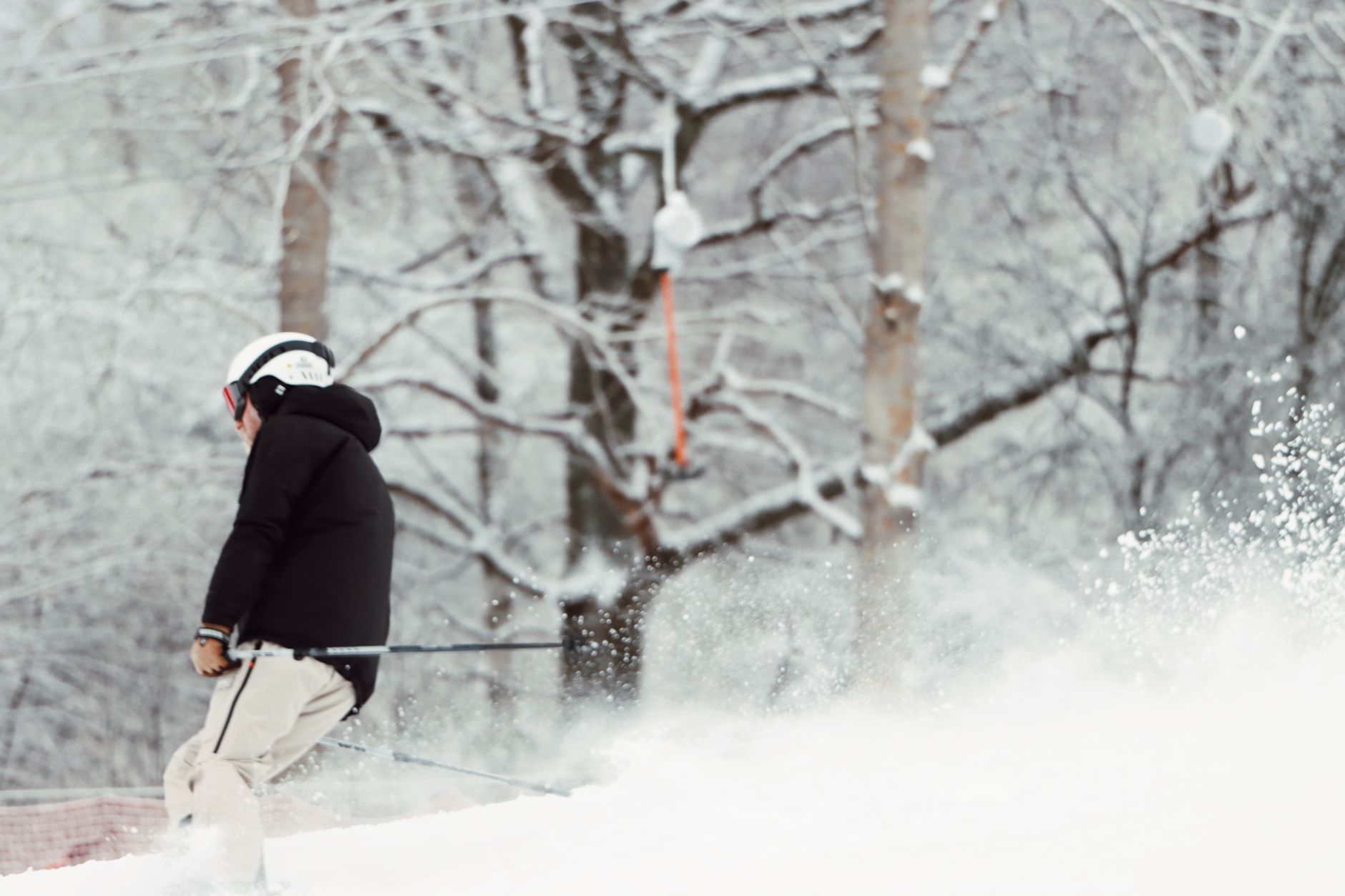
Windham County holds southern Vermont’s two big resorts, prized for being the closest major mountains to the cities — which makes them busy on weekends and lively at night.
Mount Snow, above Dover and Wilmington, is a broad and approachable mountain with powerful snowmaking, a dedicated learning area, a big terrain park and one of the strongest base scenes in the state. Its Carinthia peak is devoted entirely to freestyle terrain, which is unusual and has made it a destination for park riders. In summer it runs lift-served mountain biking and a golf course.
Stratton, further north off Route 30, is the taller and more polished of the two: a 3,875-foot summit, a twelve-passenger gondola, a purpose-built pedestrian base village of shops and restaurants, and long fall-line trails. It is also the birthplace of snowboarding as a resort sport — Jake Burton Carpenter tested his early boards here, and Stratton was among the first mountains in America to allow them.
Bromley, just over the Bennington County line at Peru, adds a third, smaller, south-facing family mountain, and Grafton and Prospect Mountain provide nordic skiing.
The preserved villages
Windham County holds some of the most perfectly preserved villages in New England, and their survival was deliberate.
Grafton was a declining mill town in the 1960s when the Windham Foundation bought and restored much of it, burying the power lines and reviving the white-clapboard core. The Grafton Inn has operated continuously since 1801 and hosted Hawthorne, Emerson, Oliver Wendell Holmes and Ulysses S. Grant; Grafton Village Cheese, founded in 1892 as a dairy cooperative, still makes raw-milk cheddar aged one to three years; and the Grafton Trails & Outdoor Center covers 2,000 acres for cross-country skiing, snowshoeing and mountain biking.
Newfane, the shire town, has a green widely regarded as one of the finest architectural ensembles in New England: the 1825 Greek Revival Windham County Courthouse with its white portico and steeple, the 1787 Newfane Inn, the 1832 Union Hall, and a Sunday flea market through summer and fall that draws collectors from across the region.
Nearby Townshend holds the Scott Covered Bridge, Vermont’s longest single-span covered bridge, over the West River, and Williamsville has a 118-foot Town lattice bridge of 1870 over the Rock River. Together the villages make a slow, rewarding half-day drive on Routes 30 and 35.
Outdoors: falls, reservoirs and the 100-Mile View
The county’s outdoors run from a legendary roadside vista to big water and gentle river trails.
Hogback Mountain, Marlboro — the 100-Mile View on Route 9, sweeping south and east to Mount Monadnock in New Hampshire and Mount Greylock in Massachusetts, with 600-plus conserved acres of trails behind it.
Jamaica State Park — 772 acres on a bend of the West River, with the flat West River Rail Trail, the Salmon Hole swimming bend and the hike to Hamilton Falls.
Hamilton Falls — 125 feet down granite ledges on Cobb Brook, six miles round trip from the park. Do not climb the rocks; there have been deaths.
Harriman Reservoir, Wilmington — nine miles long and the largest body of water entirely within Vermont, with undeveloped shoreline, windsurfing and the Ledges swimming area.
Somerset Reservoir — a remote, motor-restricted wilderness lake up a gravel forest road, with loons, eagles and occasional moose.
The Molly Stark Byway, Route 9 — the scenic road linking Brattleboro to Bennington over the mountains, past Marlboro, Hogback and Wilmington.
Practical information and where to stay
Windham County is Vermont’s most accessible from southern New England: I-91 runs the length of its eastern edge, putting Brattleboro about two hours from Boston and three and a half from New York. Route 9, the Molly Stark Byway, crosses west to Bennington; Route 30 and Route 100 run north into the mountains. Amtrak’s Vermonter stops at Brattleboro, which makes it one of the few Vermont towns you can reach without a car — though you will want one to leave it.
Winter is the busiest season, driven by Mount Snow and Stratton, with holiday weeks booked out months ahead. Foliage in the first half of October fills the villages and the Molly Stark Byway. Summer brings the reservoirs, the rail trail and Marlboro’s music festival; spring is the quiet, cheap window, with West River whitewater releases from Ball Mountain Dam in late April.
Lodging spans slopeside condominiums at Mount Snow and Stratton, the historic Grafton Inn and Newfane Inn, a good spread of mid-range hotels and B&Bs in Brattleboro and Wilmington, and camping at Jamaica and Townshend state parks. Compare live prices in the search below, with free cancellation on most rooms.
Good to know
Common questions
What is Windham County known for?
Brattleboro’s arts scene and Gallery Walk, the Mount Snow and Stratton ski resorts, the preserved villages of Grafton and Newfane, Hogback Mountain’s 100-Mile View, Harriman Reservoir and Hamilton Falls.
Why are Mount Snow and Stratton so popular?
They are the closest major ski mountains to Boston, Hartford and New York. Mount Snow is broad and approachable with a freestyle-only Carinthia peak; Stratton is taller and more polished, with a gondola, a pedestrian base village and a claim as the birthplace of resort snowboarding.
What makes Grafton and Newfane special?
Grafton was bought and restored by the Windham Foundation in the 1960s, which buried the power lines and revived its white-clapboard core; the Grafton Inn has run since 1801. Newfane’s green, with its 1825 Greek Revival courthouse, is among the finest architectural ensembles in New England.
Where is the 100-Mile View?
On Hogback Mountain in Marlboro, directly on Route 9 — the Molly Stark Byway — between Brattleboro and Wilmington. The roadside overlook sweeps south and east to Mount Monadnock in New Hampshire and Mount Greylock in Massachusetts.
Can you reach Windham County without a car?
Brattleboro is one of the few Vermont towns you can, thanks to Amtrak’s Vermonter and intercity buses, and it is very walkable. Everything else in the county — the ski areas, the villages, the reservoirs — needs a car.
Every booking through Vermont Destinations funds one verified tonne of carbon removal — same room, same price, no markup.
Find a stay