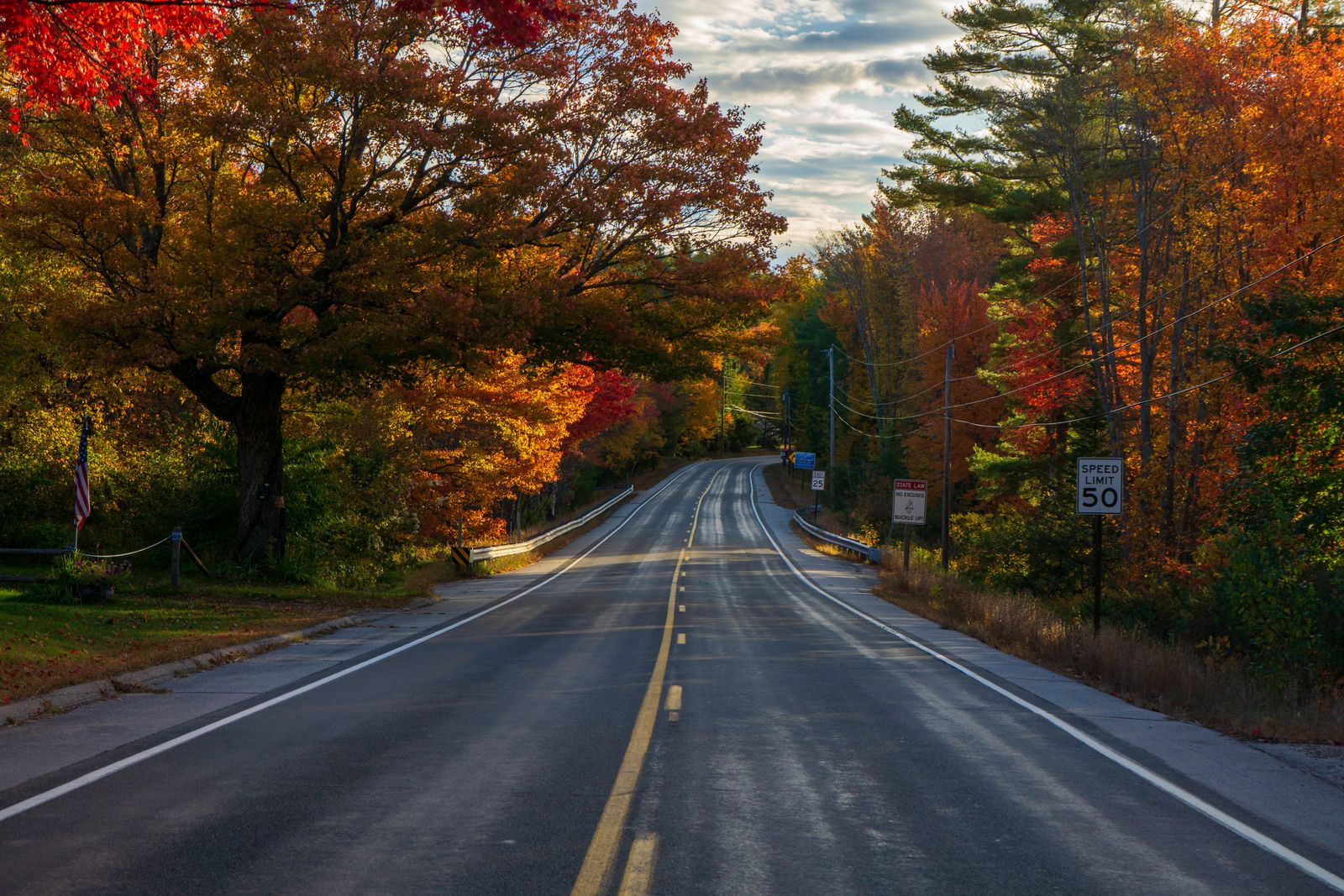
A rite of passage
For road cyclists, the Vermont Six-Gap is a legendary test. Spanning about 132 miles across the spine of the Green Mountain National Forest, it tackles six mountain passes — the 'gaps' carved through the range — with more than 12,000 feet of vertical climbing over steep, winding asphalt. It rivals a hard day in the European Alps, and finishing it is a genuine badge of honor.
You can ride it as one monster day, split it over a weekend, or cherry-pick a gap or two. Either way, it demands low gearing, good brakes and respect for the descents.
Lincoln Gap: the crux
Lincoln Gap is the centerpiece and the beast — about 4.1 miles of climbing with 1,600 feet of gain, and a final mile that ramps to a brutal 24% grade, the steepest paved mile in North America. Leaving the town of Lincoln heading east, the road narrows under a maple canopy before the wall forces most riders out of the saddle just to keep momentum. A compact chainset (50/34T) with an ultra-wide cassette (11-34T or wider) is essentially mandatory.
Gap by gap
Each of the six has its own character.
Lincoln Gap — 4.1 miles, a 24% final mile — the crux.
Appalachian Gap — alpine hairpins above the Mad River Valley.
Roxbury Gap — a dirt summit; run 28–32mm tires.
Middlebury Gap — a steady 6% past the Bread Loaf campus.
Brandon Gap — a sweeping 8-mile descent past falcon cliffs.
Rochester/Bethel — rolling valley transitions back to Route 100.
The scenery
The Six-Gap is punishing but gorgeous. The gaps thread the Green Mountain National Forest, cresting through spruce-fir forest with sudden views west to Lake Champlain and the Adirondacks or east across the White River valley. Middlebury Gap climbs past Robert Frost country and the Bread Loaf campus; Brandon Gap looks up at Mount Horrid’s peregrine-falcon cliffs. In late September, the whole route blazes with foliage — spectacular, but pack warm layers for cold summit descents.
Logistics & training
Base in Waitsfield or Warren in the Mad River Valley, central to all six gaps. Refuel at the Warren Store, the Lincoln General Store and Middlebury’s delis, and carry more food and water than you think you need — services are sparse between climbs. The season runs late May to mid-October; aim for a clear, cool day and start early. Even fit riders should train for sustained 10%+ grades before attempting the full loop.
Shorter alternatives
Not ready for all six? Ride a single gap out-and-back from the valley — App Gap from Waitsfield is the classic — or link two or three for a big-but-sane day. The gaps are also spectacular by car or motorcycle for non-cyclists, though Lincoln Gap’s steepest section and several dirt stretches reward slow, careful driving.
Good to know
Common questions
How hard is the Six-Gap?
Very — about 132 miles and 12,000+ feet of climbing over six passes, including Lincoln Gap’s 24% final mile, the steepest paved mile in North America.
What gearing do I need?
A compact chainset (50/34T) with a wide cassette (11-34T or wider) is essentially required for Lincoln Gap.
Where should I base?
Waitsfield or Warren in the Mad River Valley, central to all six gaps.
When can I ride it?
Late May through mid-October; pick a clear, cool day, start early, and pack layers for cold descents.
Can I ride just part of it?
Yes — a single gap out-and-back (App Gap is the classic) or two or three linked gaps make a big but manageable day.
Every booking through Vermont Destinations funds one verified tonne of carbon removal — same room, same price, no markup.
Find a stay