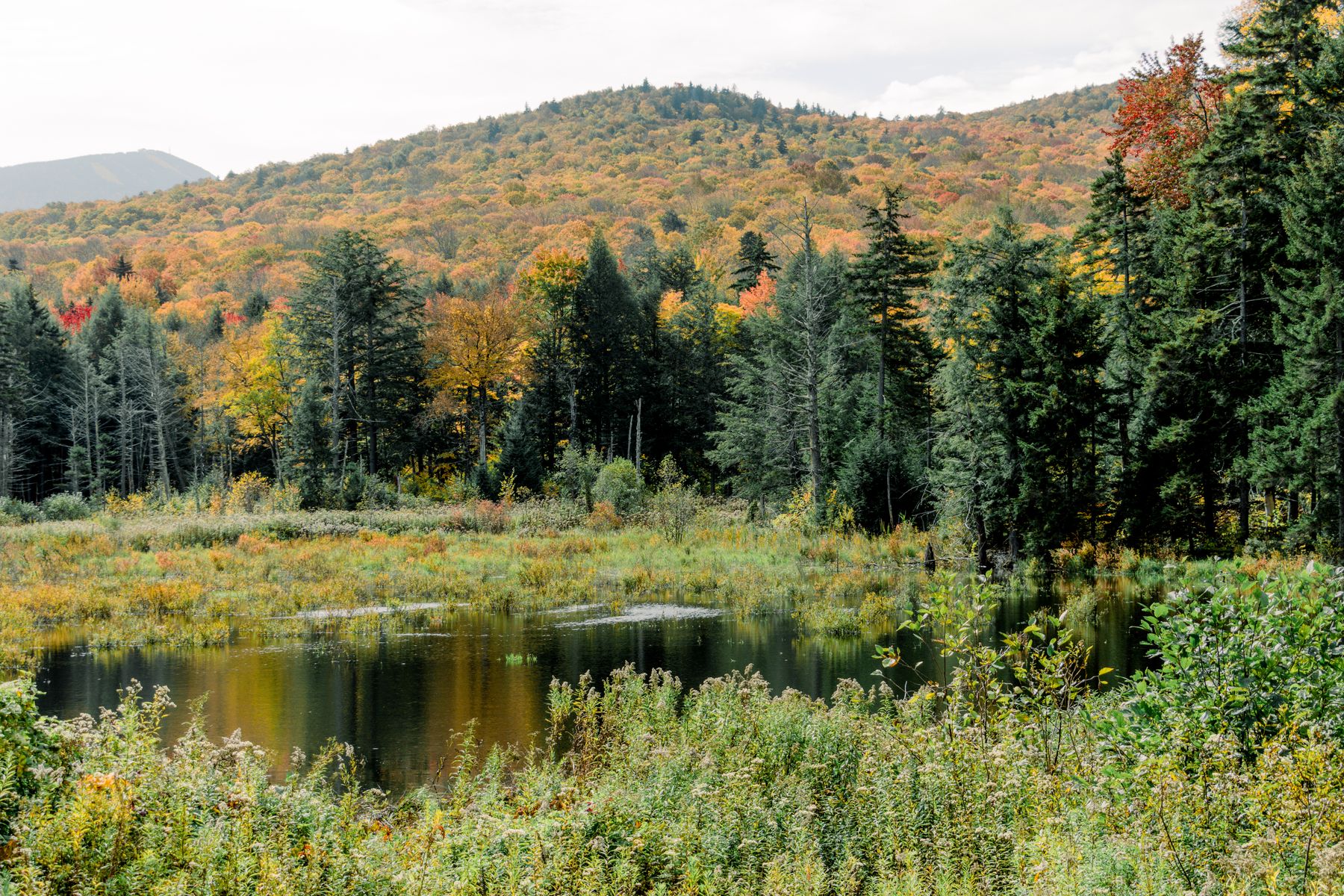
Is Vermont’s capital worth your time?
Montpelier is the smallest state capital in the country and the only one without a McDonald’s, and both facts tell you what to expect: about 8,000 people, a downtown of maybe six blocks, and a pace closer to a village than a seat of government. The honest verdict is that it earns half a day, not a full one. Come for the free gold-domed State House, an unusually good food street, and Hubbard Park’s forest trails rising straight out of downtown; do not come expecting classic Vermont postcard scenery, which sits half an hour away in Stowe and the Mad River Valley. Treat the capital as a smart, walkable lunch-and-history stop between bigger destinations.
What makes it click is density. Everything worth seeing sits between State Street and Main Street, which meet at a right angle by the Winooski River, so you never move the car once you park. State senators queue at the Hunger Mountain Co-op, the legislature is part-time and staffed by farmers and teachers, and there is not a single national chain in the core. If you like small, real places over polished tourist towns, Montpelier is a genuine pleasure. If you want ski-village bustle or a lakefront, give it ninety minutes and drive on to Waterbury, fifteen minutes west, or Burlington, forty minutes on.
A tight one-day plan that actually works
Start at 9 with pastries at Birchgrove Baking, then walk to the State House for the first free tour of the day — they run on the hour, Monday to Friday, and take about forty-five minutes. If it is a Saturday from May through October, skip the tour and hit the Capital City Farmers’ Market on the State House lawn from 9 to 1 instead; it is the town at its liveliest. Either way you are done with the formal sights by late morning, which is the point: Montpelier rewards wandering more than ticking boxes, so leave the afternoon loose.
Spend midday on foot along Main Street — Bear Pond Books is one of Vermont’s best independent bookshops, and Capitol Stationers and Woodbury Mountain Toys round out an old-fashioned retail row. Lunch at the Three Penny Taproom, then climb into Hubbard Park behind the capitol for an hour on the trails and the stone tower. If you have a car and an appetite for more, drive four miles east to Bragg Farm or ten minutes out to Morse Farm Maple Sugarworks for sugar-on-snow. That fills a day without ever feeling stretched, and it beats forcing the town to be bigger than it is.
Where to eat, ranked honestly
The food is the surprise, a legacy of the New England Culinary Institute, which trained a generation of chefs here. Ranked by who to trust: the Three Penny Taproom first — twenty-plus taps of the best Vermont and Belgian beer, a serious kitchen, and arguably the state’s best fries. Kismet is the farm-to-table pick when you want a real dinner. NECI on Main is student-run and genuinely surprising for the price. Sarducci’s covers the reliable Italian night by the river, and Birchgrove Baking owns the morning. That is a deep bench for 8,000 people, and it is the strongest single reason to eat here rather than push on to Stowe.
For self-catering and the local mood, the Hunger Mountain Co-op is a large, excellent community-owned grocery a short walk from the centre — good for trail food, Vermont cheese and coffee. What to skip: do not waste a meal chasing chain food, because there is none in the core, and do not book dinner far ahead in summer, when midweek you can usually walk in. The one night worth reserving is a fall foliage weekend, when the small number of tables fills fast. Otherwise eat spontaneously — the town is small enough that nothing good is more than three minutes away on foot.
The State House and Hubbard Park
The 1859 Vermont State House is the third capitol on the site — the first two burned — and one of the best-preserved 19th-century state houses in the country. The Greek Revival portico stands on Barre granite columns, and the dome carries 23.5-karat gold leaf topped by a wooden statue of Ceres, the Roman goddess of agriculture. Admission is free, self-guided audio tours run during business hours, and volunteer-led tours cover Representatives Hall, the Senate Chamber and the Governor’s ceremonial office, with original 1859 furnishings throughout. It is one of the last state capitols you can simply walk into, and that unguarded ease is much of the charm.
Directly behind the capitol rises Hubbard Park, 194 acres of city forest given to the town in 1899 and laced with seven miles of trails. At the top stands a 54-foot stone observation tower, built by hand from local fieldstone between 1915 and 1930; climb it for the classic view of the gold dome in its bowl with the Worcester Range beyond. In winter the trails are groomed for cross-country skiing and the pond is lit for evening skating. Combined with the State House at its foot, it makes the single best hour in town — history and forest within a two-minute walk of each other.
The half-hour day trips that outshine the town
Be honest with yourself: the capital’s best asset is its position, and two nearby outings beat anything inside the town limits. Barre, five minutes southeast, holds the Rock of Ages quarry — the largest deep-hole dimension-granite quarry in the world, with roughly 600-foot walls and a seasonal narrated shuttle for about $6 — and Hope Cemetery, 65 acres and 10,000 carved granite monuments made by the stonecutters buried beneath them. Give the pair a half-day from May to October. It is the most memorable few hours in the region, and it is what turns the capital from a lunch stop into a place worth a night.
Fifteen minutes west, Waterbury is the food-and-drink day: Ben & Jerry’s factory a mile north on Route 100, Cold Hollow Cider Mill’s cider donuts three miles on, the Alchemist cannery for Heady Topper, and Prohibition Pig’s barbecue in the village. Beyond that, Stowe and Mount Mansfield are thirty minutes north, the Mad River Valley thirty south, Camel’s Hump thirty-five and Burlington forty. If your trip is really about Vermont scenery, base in Waterbury and treat Montpelier as the half-day it deserves; if the capital and its food are the point, sleep downtown and drive out from there each morning.
Getting to the capital, with or without a car
By road the capital is easy to reach and easier to park. From Boston it is about three hours and 180 miles up I-93 and I-89 to Exit 8; from Burlington International Airport it is a 40-minute, 38-mile run south on I-89; and from White River Junction and the Upper Valley it is roughly 45 minutes north. Downtown parking is metered along State and Main Streets and free in the municipal lots behind the shops after 5pm and on weekends, so you pay only for weekday business hours. Because everything worth seeing sits within a five-minute walk, you park once and leave the car. Drive if you plan the Barre, Waterbury or Stowe day trips — none of them work without one.
Montpelier is also one of the few Vermont towns you can reach by rail. Amtrak’s Vermonter runs one train each way daily between St. Albans and Washington, D.C., stopping at Montpelier Junction about three miles west of downtown in Berlin, where a short taxi or rideshare bridges the gap. Green Mountain Transit runs weekday buses linking the capital with Barre, Waterbury and Burlington, and its route 86 Montpelier LINK Express reaches downtown Burlington in about an hour for a couple of dollars. Carless, you can see the State House, Main Street and Hubbard Park with no trouble, but the quarry and the breweries need wheels. Come by train for the town; rent a car if you want the region.
Flood recovery, seasons, and a room
Downtown Montpelier was hit hard by the July 2023 Winooski flood, and the honest update matters: the restaurants, shops and State House are fully back, but a few independents closed for good and some riverfront trails were slow to reopen, so check before you plan a walk along the water. The town’s rhythm otherwise follows the legislature — January through early May the part-time session is in, midweek rooms fill with lawmakers, and the State House cafeteria offers the best people-watching of the year. Summer is quiet and green; foliage from late September into the first week of October is the peak, and the gold dome against red maples is the shot everyone comes for.
For a bed, the math is simple. The Capitol Plaza at 100 State Street is the only full-service downtown hotel, across from the dome, from about $170 with a 4.3 guest score; the Inn at Montpelier is the character alternative on Main Street at $200 to $310. When both are full — foliage weekends especially — fall back to the chains in Berlin off I-89 Exit 7, or base fifteen minutes west in Waterbury, where the Best Western Plus starts near $158 with a pool and free breakfast. Book any October weekend two to three months out; stick season, late October to mid-December, is the quiet walk-in bargain.
Good to know
Common questions
Is Montpelier worth visiting?
Yes, for half a day. Come for the free gold-domed State House, an unusually good food street led by the Three Penny Taproom, and Hubbard Park’s forest trails behind the capitol. Do not expect classic Vermont scenery — that sits thirty minutes away in Stowe and the Mad River Valley. Treat it as a walkable history-and-lunch stop.
What is the capital of Vermont?
Montpelier, a town of about 8,000 people, is the capital of Vermont and the smallest state capital in the United States — famously the only one without a McDonald’s. Its 1859 State House carries a 23.5-karat gold-leaf dome topped by a statue of Ceres, and the entire downtown is walkable in about twenty minutes.
How long do you need in Montpelier?
A half-day covers it: a morning State House tour or the Saturday farmers’ market, a walk along Main Street, lunch at the Three Penny Taproom, and an hour in Hubbard Park. Add the Rock of Ages quarry and Hope Cemetery in Barre, five minutes away, and you can justify a full day and a night.
How is Montpelier recovering from the 2023 flood?
Well. Downtown took serious damage from the July 2023 Winooski flood, but the restaurants, shops and State House are fully operational again. A handful of independent businesses closed permanently, and some riverfront trails reopened slowly, so confirm those are accessible before planning a walk along the water.
Where should I stay to visit the capital?
The Capitol Plaza Hotel at 100 State Street is the only full-service downtown hotel, from about $170 across from the State House; the Inn at Montpelier ($200-$310) is the character option. If you are touring the wider region, base fifteen minutes west in Waterbury, where rooms are cheaper and closer to Stowe and the breweries.
Can you visit Montpelier without a car?
Yes, for the town itself. Amtrak’s Vermonter stops daily at Montpelier Junction, three miles west in Berlin, and Green Mountain Transit’s route 86 Montpelier LINK Express connects downtown Burlington in about an hour. The State House, Main Street and Hubbard Park are all walkable. But day trips to Barre’s quarry and Waterbury’s breweries need a car.
Every booking through Vermont Destinations funds one verified tonne of carbon removal — same room, same price, no markup.
Find a stay