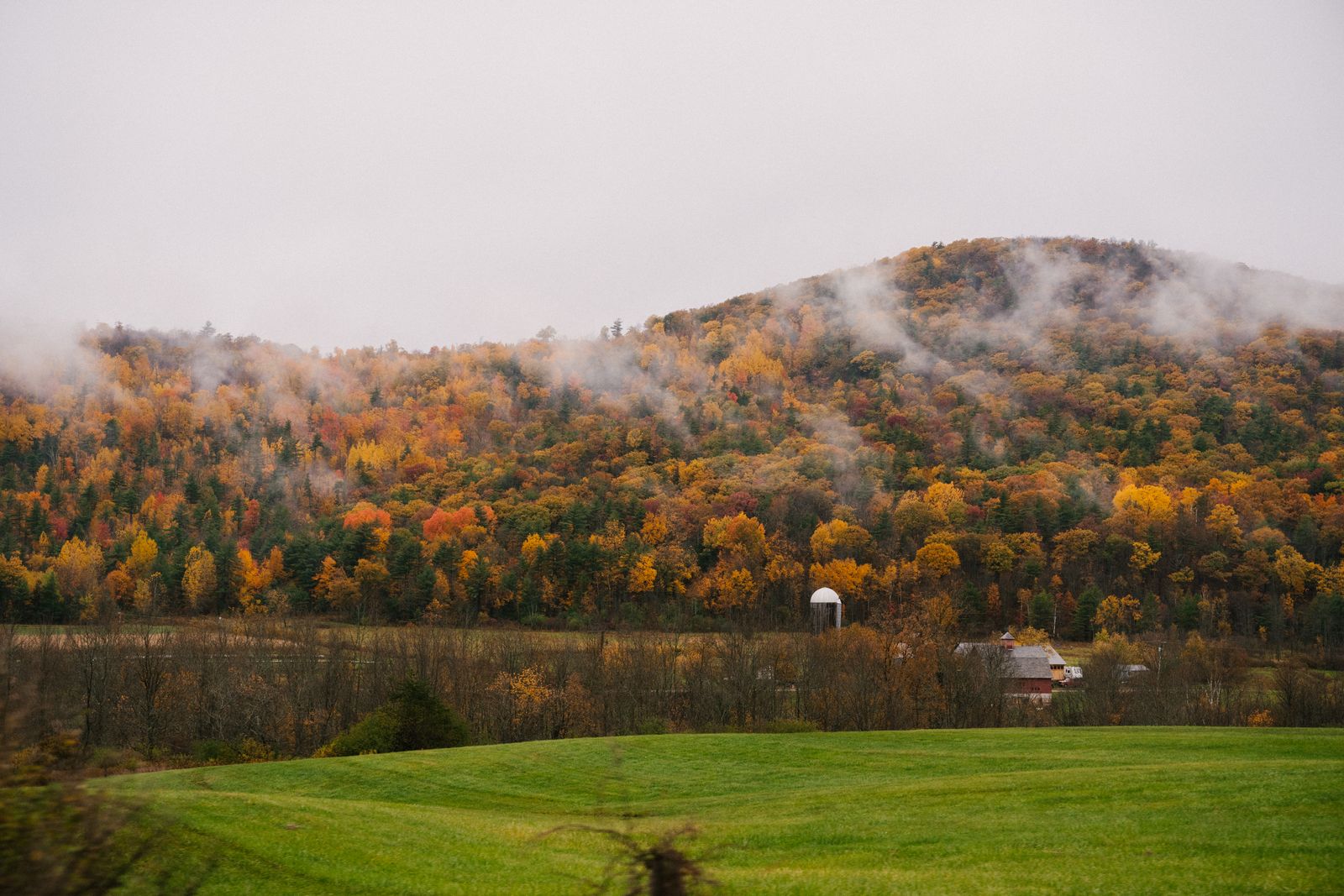
Moose country
Essex County holds Vermont’s densest moose habitat, centered on the wetlands and cut-overs of the Nulhegan Basin. The animals browse at the forest edge at dawn and dusk, and Route 105 between Island Pond and Bloomfield is the classic slow-drive corridor for spotting them.
Drive carefully, keep your distance, and never get between a cow and her calf.
Boreal birds & beavers
This is the only part of Vermont with a true boreal bird community — spruce grouse, gray jays, boreal chickadees and black-backed woodpeckers — alongside beaver ponds, otters and the occasional bear. Birders travel here specifically for species found nowhere else in the state.
Under the darkest skies
With almost no light pollution for miles, Essex County offers some of the finest stargazing in the eastern US. On a clear, moonless night the Milky Way arches over the basin, and meteor showers are spectacular from any dark pull-off.
Watching responsibly
Bring binoculars, go at dawn or dusk, move slowly and stay in or near your vehicle for moose. Pack out everything, and respect that much of the land is working forest and private camp country.
Good to know
Common questions
Where can I see moose?
Along Route 105 and the Nulhegan Basin roads at dawn and dusk — Essex County is Vermont’s most reliable moose habitat.
What makes the birding special?
It has Vermont’s only true boreal bird community, including spruce grouse and gray jays, drawing birders from across the region.
Is it good for stargazing?
Exceptionally — almost no light pollution means brilliant Milky Way and meteor-shower viewing on clear nights.
Every booking through Vermont Destinations funds one verified tonne of carbon removal — same room, same price, no markup.
Find a stay